Duke Bune - Wealth, Eloquence and the 26th Spirit of the Goetia

Yagya Sachdeva
- August 8, 2026
- 8 min read
Some people know how to earn money but struggle to keep it.
Others have valuable ideas but cannot explain them confidently. They hesitate during meetings, undercharge for their work, or fail to present their value clearly.
This is why practitioners do not approach Duke Bune only for wealth.
Bune is connected with riches, wisdom, eloquence and true answers. His current is often worked with when a person needs both financial opportunity and the intelligence to use it properly.
Who Is Duke Bune?
Duke Bune, also written as Bimé or Bim, is the twenty-sixth spirit named in the Ars Goetia, the first section of the Lesser Key of Solomon.
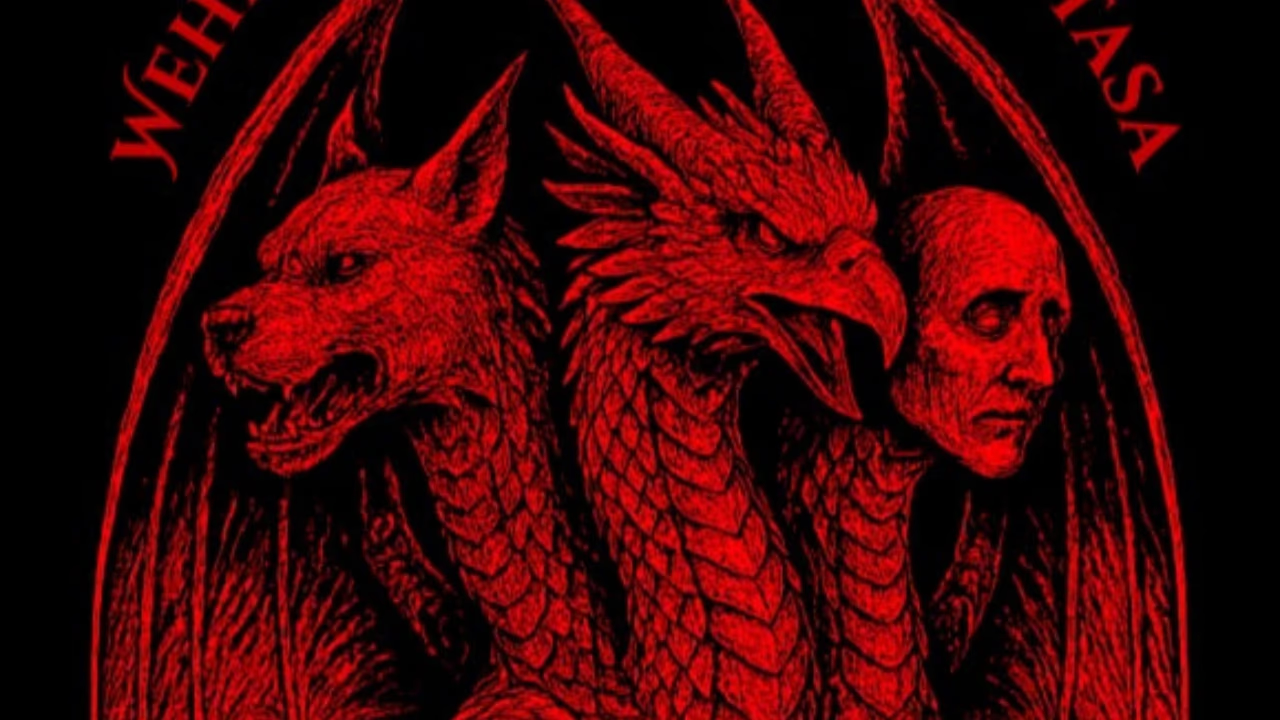
The grimoire describes him as a “Strong, Great and Mighty Duke” who commands thirty legions of spirits. He appears as a three-headed dragon: one head like a dog, one like a gryphon and one like a man. He is also described as speaking with a high and pleasing voice.
The text gives him four important abilities:
- He gives riches
- He makes a person wise
- He makes a person eloquent
- He gives true answers to questions
The grimoire states directly that Bune “giveth Riches unto a Man, and maketh him Wise and Eloquent.”
This is why Bune is considered much more than a simple money spirit.
Bune’s Power Over Wealth
Duke Bune may be approached for financial growth, business opportunities, profitable work and stronger control over money.
Practitioners commonly work with him when they want support with:
- Increasing income
- Attracting better business opportunities
- Finding clients or profitable projects
- Improving the movement of money
- Building long-term wealth
- Receiving fair value for their work
- Making better financial decisions
Bune’s wealth current is not only about receiving money quickly.
It is also connected with becoming wiser about money.
A person may begin to notice where income is being lost, which opportunity deserves attention, what service should be developed, or where they have been underestimating their own value.
Why Eloquence Matters in Wealth Work
The Ars Goetia specifically says that Bune makes a person eloquent.
Eloquence means being able to express yourself clearly and effectively.
This is directly connected with money.
A business owner needs eloquence to explain a product. A consultant needs it to communicate value. An employee needs it during a salary negotiation. A salesperson needs it while speaking with clients.
You may have the right skill and still lose opportunities because you cannot present it properly.
Practitioners may therefore approach Bune before:
- Business presentations
- Client meetings
- Sales conversations
- Salary negotiations
- Interviews
- Contract discussions
- Important financial decisions
The intention is not to control the other person.
It is to speak with confidence, clarity and authority so that your value is properly understood.
Bune and Financial Wisdom
The grimoire does not separate riches from wisdom.
It assigns both powers to Bune.
This is important because earning money without knowing how to manage it does not create stable wealth.
Someone may receive a large amount and spend it carelessly. A business may increase sales but continue losing money through poor pricing, unnecessary expenses or weak planning.
Bune may be approached for clearer financial judgement, including:
- Understanding which opportunity is genuinely useful
- Recognising poor financial decisions
- Learning when to invest and when to wait
- Charging appropriately
- Managing income more carefully
- Building wealth instead of only seeking urgent money
The goal is not only to receive more.
It is to become capable of holding and growing what is received.
Bune and True Answers
The Ars Goetia also says that Bune gives true answers to demands or questions.
Practitioners may work with this aspect when they need clarity around a financial or business matter.
For example:
- Is this partnership useful?
- Should this business offer be continued?
- Why is money being lost?
- Which income source deserves more attention?
- Is this deal worth accepting?
- What financial habit needs to change?
This does not replace research, legal advice or financial planning.
It is used as spiritual support for understanding a situation more clearly.
What Do Bune’s Three Heads Represent?
The Ars Goetia describes Bune as a dragon with the heads of a dog, a gryphon and a man. The grimoire gives the image but does not explain its symbolism.
In practitioner interpretation, the three heads may represent different parts of his current:
- The dog may represent instinct, loyalty and the ability to locate what is being sought.
- The gryphon may represent guardianship, authority and valuable resources.
- The human head may represent intelligence, speech and practical judgement.
This symbolism should be understood as interpretation, not as an explanation directly provided by the grimoire.
Bune’s Other Office in the Goetia
The Ars Goetia also assigns Bune an office connected with the dead. It says he changes the places of the dead and gathers spirits under his command around sepulchres.
This part of his description is separate from wealth and eloquence work.
It is important to mention because it appears in the original text, but beginners should not combine funerary or spirit-contact work with money rituals without proper training.
How Practitioners Work With Duke Bune
Structured work with Bune may involve his sigil, enn, a written petition, suitable offerings, ritual timing and a formal opening and closing.
A trained practitioner first decides what the working is actually for.
Is the intention wealth, business growth, eloquence, financial wisdom or answers around a particular decision?
Trying to ask for everything at once creates an unclear ritual.
Invocation and Evocation Are Not the Same
The Duke Bune Wealth Spell Course explains the difference between invocation and evocation.
Invocation generally means calling the spirit’s qualities or current into the practitioner’s awareness and work.
Evocation generally means calling the spirit into a defined ritual space outside the practitioner.
These methods should not be treated as identical.
A practitioner needs to understand the purpose, boundaries and structure of the chosen method before beginning.
This is one reason copying a sigil and repeating an enn from social media is not the same as learning a complete ritual system.
Working With Bune’s Sigil
Bune’s sigil acts as the main ritual focus in many workings.
A practitioner may draw or prepare the sigil, place it within the ritual space, and use it while stating a clear petition.
The sigil should not be treated as decoration.
It represents the specific spirit being approached and should be prepared and handled with respect.
The course also teaches how to draw and activate the sigil correctly rather than using it without understanding its purpose.
Writing a Petition for Wealth
A wealth petition should be clear.
Weak petition:
“Make me rich.”
Clear petition:
“Open suitable and ethical opportunities through which my business can attract consistent, well-paying clients.”
Another example:
“Help me communicate my value clearly during this negotiation and receive fair payment for my work.”
A clear petition explains:
- What is needed
- Why it is needed
- Which area of life it concerns
- What practical action the person is taking
Bune may support wealth and eloquence, but the practitioner must still answer messages, send proposals, improve the offer and handle money responsibly.
The Triangle, Protection and Ritual Closing
Formal Goetic practice may use a defined ritual space, including a protection circle and a triangle of evocation.
These elements are not included only for appearance. They create structure, establish boundaries and help the practitioner understand where the working begins and ends.
The ritual should also be closed properly.
The Duke Bune course includes the license to depart, which is the formal conclusion of the working. The practitioner acknowledges the spirit and ends the ritual respectfully.
Opening a ritual without knowing how to close it is incomplete practice.
Offerings and Respect
Offerings should be chosen according to the practitioner’s system and the nature of the spirit.
They should not be copied randomly from unrelated rituals.
Respect does not mean fear. It means being prepared, keeping the request clear, fulfilling any commitments made during the working, and giving proper acknowledgement when movement is experienced.
A spirit should not be approached as though it is a machine that must produce money on demand.
The practitioner also has responsibilities.
What Bune Work Does Not Replace
Duke Bune may support wealth, wisdom, eloquence and financial clarity.
But spiritual work does not replace:
- Business planning
- Skill development
- Customer service
- Legal review
- Financial advice
- Proper pricing
- Saving and money management
- Practical action
No specific income, deal or timeline can be guaranteed.
Bune may help open an opportunity or improve the way you communicate. You must still recognise the opportunity and use it properly.
Duke Bune Wealth Spell Course
The Duke Bune Wealth Spell Course by Abhishek Ji teaches a structured approach to working with Bune.
For enrolment, connect with Astro Vistaar on WhatsApp at 8477000444.
Duke Bune is recorded as giving riches.
But the same description also says he gives wisdom and eloquence.
That combination matters.
Money may enter through an opportunity, but wisdom helps you choose the right one. Eloquence helps you communicate your value. Good judgement helps you keep what you receive.
Working with Bune should not only be about asking:
“How can I get more money?”
It should also help you ask:
“Am I ready to recognise, communicate and manage greater value?”
Duke Bune may help bring riches.
His deeper work is helping you become wiser about the wealth you seek.